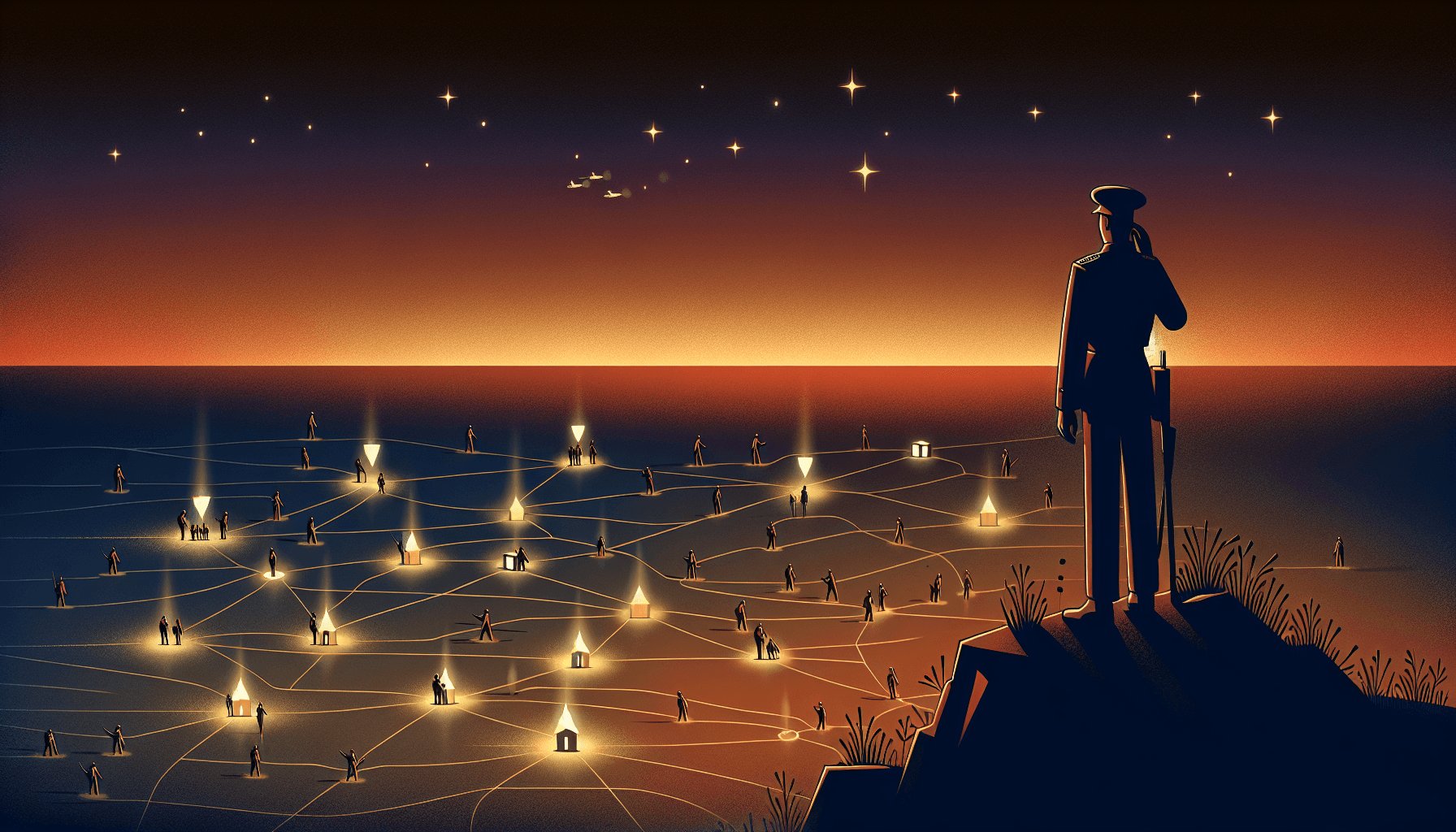
0755 hours. The command post is dim, screens glowing.
Situation reports from fifteen fronts are coming in simultaneously.
The Operational Picture
0800 — Flash traffic from the healthcare theater: the cataract AI diagnostic page needs a display overhaul. The evaluation committee arrives this afternoon for a live demo. This is a time-critical engagement. No fallback position.
0900 — The eldercare theater reports in: 115 accreditation indicators just got a document format update. The existing system's data architecture must adapt. Supply line specifications shifted — the front line has to move with them.
1000 — Reconnaissance from the education theater: speech recognition API response times spiked from 200ms to 3 seconds. Students are completely stalled mid-assignment. A crack in the defensive line. Left unpatched, the entire perimeter weakens.
Three fronts open fire at the same time. Your reaction time determines the outcome.
Before the Command System: The Bad Old Days
The old me was a general without a staff — fifteen urgent dispatches from the front, all crammed into my own head. I jumped between three LINE group chats not knowing which front to reinforce first. Every task half-done. Every client convinced I was busy supporting someone else, leaving them exposed.
That wasn't warfare. That was firefighting. And every fire was only half extinguished.
Now: every front receives a response within thirty minutes. Clients have no idea twelve other campaigns are running in parallel.
The difference isn't that I fight harder. The difference is I built a command structure.
Standing Order No. 1: Deploy the Reconnaissance Net
Every project has an AI sentry monitoring its theater of operations.
The sentry's mission is precise: continuously survey each front — are there new hostiles (open tasks)? When was the last intelligence update? Has any position been compromised (something broken)? Has any outpost gone silent for over a week — because silence usually means the situation is deteriorating?
Sentries do not engage. They report.
The critical distinction: this is active reconnaissance, not passive patrol. I don't interrogate each of my fifteen fronts every morning asking "what's your status?" The reconnaissance net pushes a consolidated brief: "Commander, these three theaters require your attention today."
It's a reconnaissance force that never needs rotation. Never fatigues. Never misses a critical dispatch because of a long march the night before.
Standing Order No. 2: One Communication Channel — GitHub Issues Is the Single Command Frequency
This is the supreme regulation of the entire command structure, and the hardest discipline to enforce.
Every operational directive, regardless of origin, enters through one channel: GitHub Issues.
Healthcare client mentions a button change in LINE — Issue filed. Eldercare facility emails about updated document standards — Issue filed. I think of a tactical optimization in the shower — Issue filed.
If it hasn't entered the Issue system, it does not exist at HQ.
It sounds like martial law. But it solves the problem that used to wreck my days: I always know exactly where every pending operation lives. No scrolling through LINE searching for that one message. No digging through email asking "what did the client want changed?" No holding five pieces of intelligence in my head hoping I don't drop one.
HQ holds everything. I just issue decisions.
Standing Order No. 3: The Daily Situation Briefing — Full Picture in Five Minutes
Every day I receive one reconnaissance summary. It answers a single question: of fifteen fronts, which ones need the commander's direct attention today?
Which theater has a task stalled for over seven days? Which front's allied forces (clients) have gone quiet and may need a proactive check-in? Which outpost's fortifications (code quality) are starting to crumble? Which campaign's deadline is closing in?
Five minutes. Fifteen fronts. Complete operational awareness. Here's what an actual briefing looks like:
🔴 Medical AI Platform — Issue #47 stalled 9 days, client demo Friday
🟡 Care Home System — Last commit 12 days ago, needs proactive recon
🟢 Career Counseling Tool — 3 Issues completed, awaiting closure confirmation
No opening fifteen separate tactical maps. No trying to recall from memory when I last engaged each theater.
This is what shifted me from "retreating under fire" to "commanding the battle." The distance between those two states is far greater than it sounds.
Standing Order No. 4: The Commander Does Not Go to the Front Line
This is the supreme doctrine of the entire system.
AI handles the missions that require sustained attention — surveillance, early warning, intelligence processing, threat classification. These tasks are the most mentally devastating for humans. For AI, they are trivial.
I handle the missions that require judgment — is this feature worth committing forces to? Should this bug be fixed now or in the next offensive? Is this client request reasonable?
AI conducts reconnaissance and raises alerts. I issue the orders.
Once that line is drawn, the command structure holds. Scouts don't launch unauthorized attacks. The commander doesn't waste hours standing watch.
Field Report from the Front
A client once told me: "Working with you feels like there's a whole team behind you."
He didn't know that "team" was one commander and a command system.
What clients — the allied forces on the front — actually care about isn't your troop strength. They care about:
- Response time — send a distress signal, hear back within thirty minutes
- Intelligence integrity — need to retrieve any document, find it immediately
- Reliable commitments — if I said this offensive would take the objective, it takes the objective
Sustaining all three on willpower alone? You won't last a year. Sustaining them on a command system? I've been running this for twelve months straight without dropping a thread.
The Supply Line: SOP Is the Foundation of Everything
One person's cost, distributed across multiple theaters' outcomes — operational efficiency is naturally higher than a lone soldier fighting on instinct.
But there is one critical prerequisite: every front must have its own standard operating procedure.
A theater without SOP cannot support a reconnaissance net. If you don't know what "healthy" looks like for that front, you don't know what triggers an alert, and the entire surveillance apparatus becomes noise.
I spend more time building each front's SOP than I do writing its first line of code. Most people reverse that order. That's where command structures collapse.
A Battle Lost: Lessons Learned
This command system didn't look like this on day one. I've fought losing battles and paid the price.
The worst defeat: promoting AI from "reconnaissance" to "combat operations" too early. I let it stop merely reporting and start making changes — editing code, triggering deployments.
A few months in, the battlefield was chaos. I had no idea which positions the AI had altered versus which ones I'd modified myself. The time spent auditing the damage exceeded the time the AI had originally saved me.
After that defeat, I established an iron rule: the reconnaissance corps observes only. It never opens fire. Every modification to any position must be ordered by the commander personally.
That single rule made the entire command system trustworthy.
The Secret to Fifteen Fronts
It's not more soldiers.
It's not longer hours of operation.
It's a better command system — one that lets you direct your limited forces and the commander's limited attention toward the battles that genuinely require your personal judgment.
AI's reconnaissance capability is now strong enough to carry the weight of "continuous surveillance across fifteen fronts" for you.
The only remaining question: have you taken the time to build your command structure?